

Restoration
Professional Photo Restoration
Every photo is restored by hand, one at a time, by our team of skilled digital artists. We carefully repair faded, torn, and damaged images, rebuilding the detail piece by piece to bring your memories back to life. Based in Canberra and trusted by customers here and, on occasion, around the world.
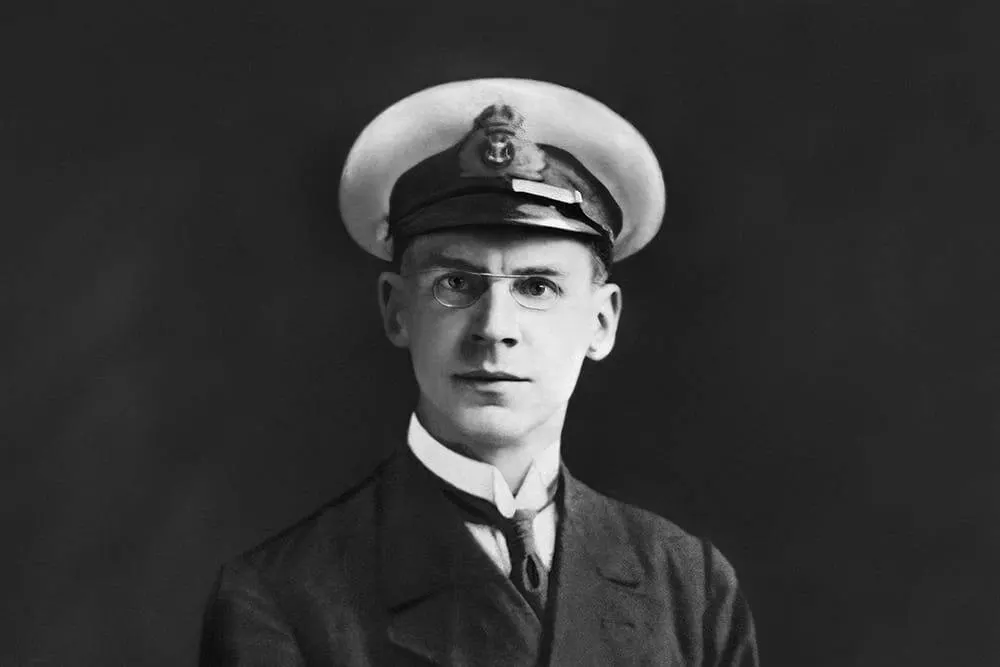
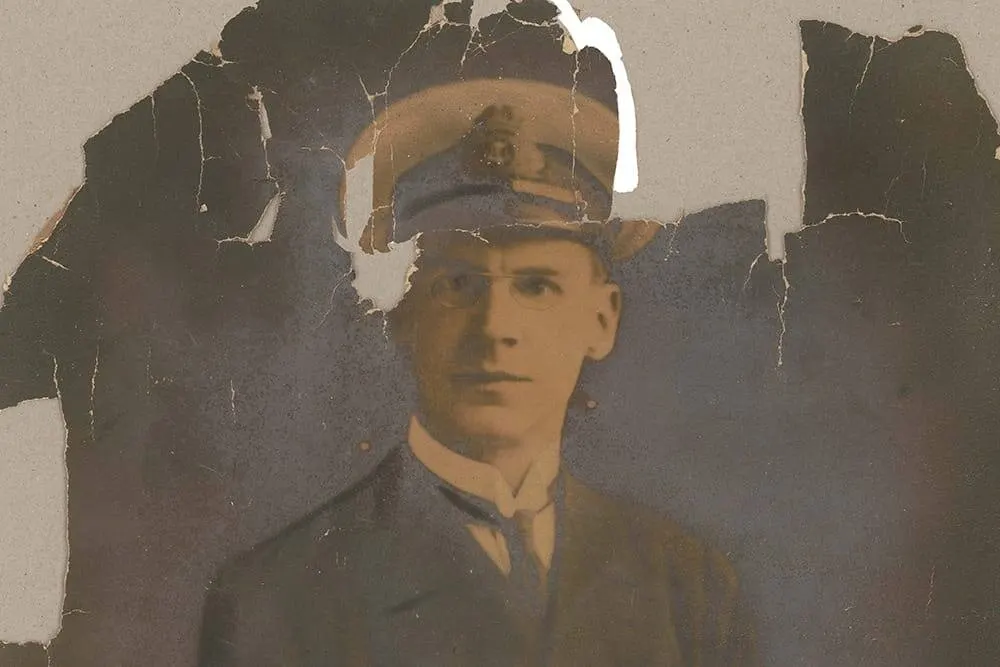
What kind of work do our photo restorers do?
Repair creases and tears
Repair water damage
Remove stains and scratches
Recover faded photos
Recovery of missing areas
Replace backgrounds
Photo Restoration Pricing
Every price includes scanning if required, safe storage of your original in our care, the restoration itself, and digital delivery. Restoration is charged by the time your photo actually needs, so the table below is a guide - use the estimator above for a range that applies to your photo.
Additional Services
* Fragile objects include those that require additional care when rolling (or un-rolling) or cannot easily be stored flat in document folders.
Get a Quote
Take a photo of your photograph and put it through the estimator above. We'll tell you what we can see in it and what the restoration costs.
Ask Us InsteadSee the work at full size
Before and after sliders on real jobs - drag the handle to compare the original with the finished restoration.
What each kind of damage actually takes
Restoration is priced by time, so it helps to know what makes one photograph a half-hour job and another a full day. It is rarely how bad the photograph looks - it is how much of the original information survives.
- Tears and creases. Among the most tractable damage, even when a tear runs through a face. The information exists on both sides of the break; the work is aligning the two edges and rebuilding the narrow band lost in the fold. A crease that has cracked the emulsion along its length takes longer than a clean tear, because the loss is spread rather than concentrated.
- Water damage and staining. Highly variable. A stain that has discoloured the surface but left the image legible underneath is a colour problem. Water that has lifted or dissolved the emulsion has removed the image itself, and that area has to be reconstructed from context.
- Fading. Old colour prints usually fade unevenly, because the three dye layers have different lifespans - the cyan typically goes first, which is why so many prints from the 1970s and 80s have drifted orange-red. Where enough signal survives in each layer, a great deal can be pulled back. Where a layer has gone entirely, its colour is being reconstructed rather than recovered.
- Silvering. The mirror-like metallic sheen on old black-and-white prints, usually worst in the dark areas, caused by silver migrating to the surface. It is a surface artefact rather than lost image, so it responds well - though it has to be captured carefully first, because raking light makes it far worse.
- Mould and foxing. The brown speckling that damp storage produces. Removing it is painstaking rather than difficult, since each spot is small and there are usually a great many of them. Costs scale with the count, not the size.
- Missing areas. A torn-off corner, a chunk lost to an album's adhesive, a hole where a drawing pin went through. Where the missing area is background or pattern, it can be rebuilt convincingly. Where it is half of somebody's face, we are making an informed reconstruction, and we will say so before starting rather than after.
What we will tell you before we start
Some things cannot be recovered, and we would rather say so at the quote than deliver a disappointment.
Detail that was never captured is gone: a face out of focus, a subject lost to camera shake, a figure so far away they occupy twenty pixels. No amount of skill or software recovers it, and anything that appears to have done so has invented it. The same applies to a print that has faded past the point where any signal survives in an area - a completely blown-out white sky contains nothing to bring back.
We are also careful about the difference between restoring and inventing. Where a face is partly missing, there is a real choice: leave the loss visible and honest, or reconstruct it plausibly. Families differ on which they want, and it is not our decision to make quietly. If a photograph needs that call, we will show you the options.
What we can nearly always do is produce something far better than what you are holding, and produce it without putting the original at any risk - because the original is never treated, cleaned or mended. Every repair happens on a digital copy. Your photograph comes home in the same condition it arrived in.
Looking after the original in the meantime
Most of the photographs that reach us have been damaged by storage rather than by accident, and a few habits prevent the next round of it.
- Do not try to flatten a rolled photograph. Old prints become brittle and will crack along the roll. If it needs flattening, that is a controlled process - bring it rolled.
- Do not attempt to separate photographs that have stuck together, or a print that has fused to glass. Pulling them apart takes the emulsion with it, which converts a recoverable job into an unrecoverable one. Bring them as they are.
- Do not use sticky tape on a tear, ever. The adhesive migrates into the paper and stains permanently, and the stain is harder to deal with than the original tear.
- Get them out of the loft and the garage. Heat and humidity cycling does more cumulative damage than anything else. An interior cupboard is far better.
- Store flat, not upright, in acid-free enclosures. The self-adhesive "magnetic" albums of the 1970s and 80s are actively harmful - their adhesive yellows and bonds over time.
- Once digitised, keep more than one copy. A drive in a drawer is one flood away from being no copies at all.
Once restored, the usual outcome is that the repaired version is printed on archival paper and framed for the wall, while the original goes back into safe storage. That way the fragile thing stops being handled, and the thing on display can be reprinted whenever it is needed.