

Custom Matboards
High quality matboards cut to fit existing frames or to present photographs and artworks with a more premium feel.
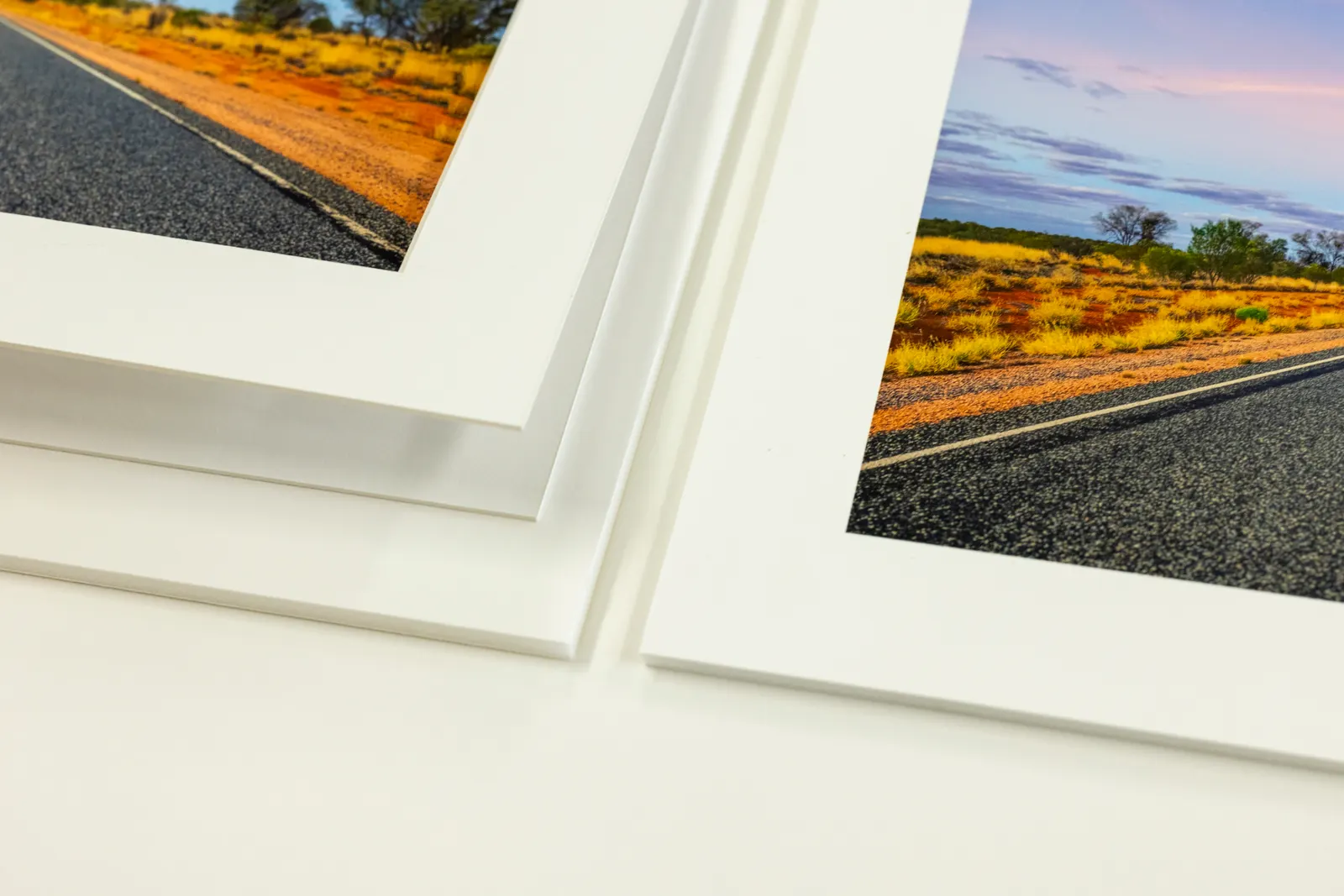
Essentials Matboards
Fixed-size matboards with a backing board that are ready to insert photos. These matted prints are sleeved and are a perfect option for gifting precious memories.
A 20% discount applies when order 2+ matboards of the same size.
Custom Sizes
Order a custom-sized matboard - enter your width and height, then choose a matboard quality (Premium, Conservation or Museum) and backing board (None, Matboard, Foamboard, or Matboard & Foamboard).
Order OnlineWhat are the different levels of matboard quality?
Our made to measure fine art matboards are made to one of the following standards.
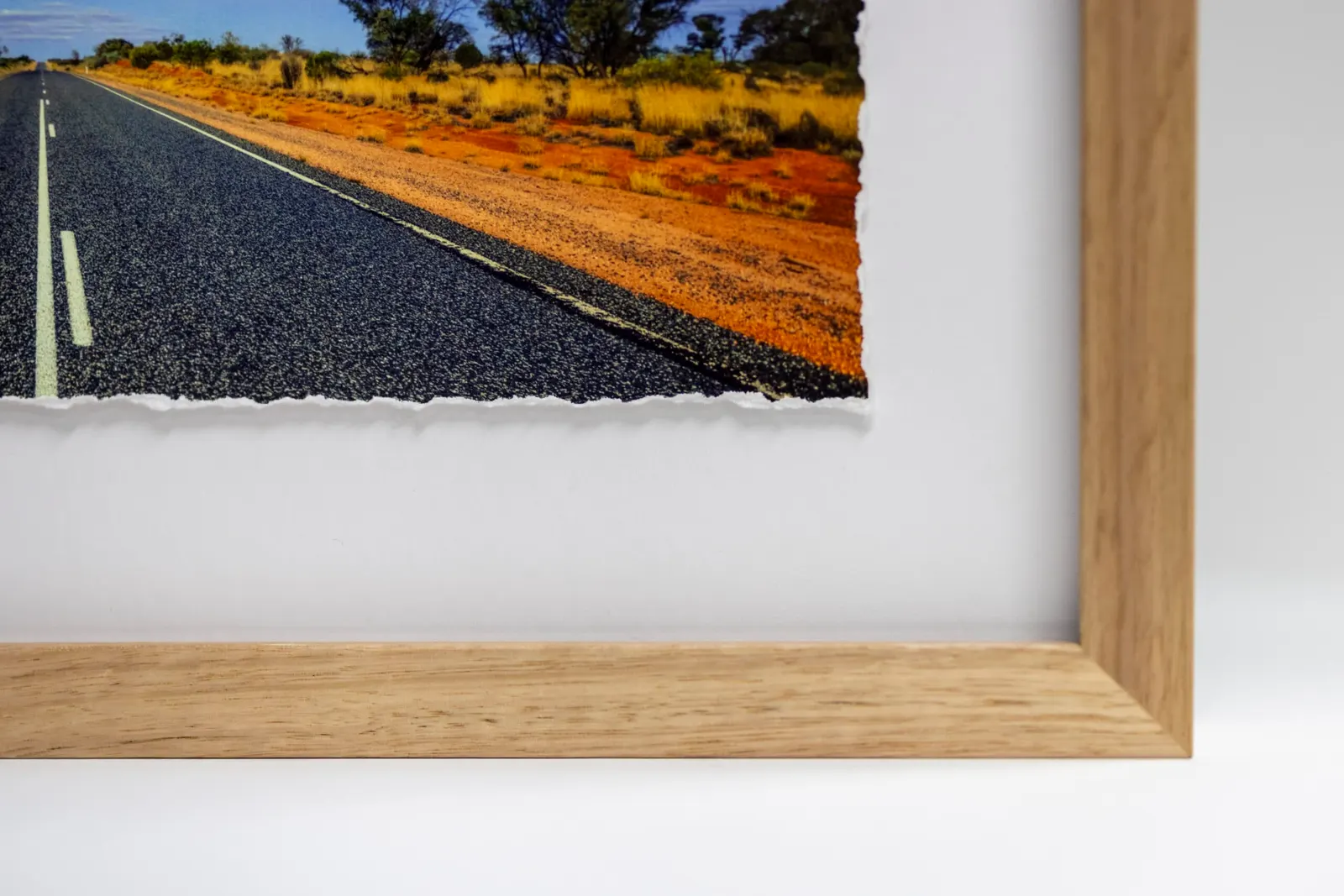
Premium Framing
Premium level framing uses materials and processes to protect and preserve artworks for up to 5-10 years in ideal conditions.
Typical Materials
- Peterboro Whitecore Board
- TrueVue Premium Glass/Acrylic
- TruVue Ultravue AR70 Glass
- Filmoplast P90 Archival Framing Tape
Conservation Framing
Conservation level framing uses materials and processes to protect and preserve artworks for up to 20 years in ideal conditions.
Typical Materials
- Peterboro Conservation Board
- TrueVue Conservation Glass/Acrylic
- Artglass UV 99
- Lineco Water-Activated Hinging Tape
Museum Framing
Museum level framing uses materials and processes to protect and preserve artworks for up to 35 years in ideal conditions.
Typical Materials
- Peterboro Museum Board
- TruVue Museum Glass/Acrylic
- Artglass AR 99 Protect
- Lineco Water-Activated Hinging Tape
What a mat is actually for
A mat looks like a decorative border, and it does help - it gives the eye somewhere to rest before it reaches the frame, and it stops a picture feeling cramped against the moulding. But the presentation is the smaller half of the job.
The important half is the air gap. A mat holds the artwork a couple of millimetres clear of the glazing, and that gap is what prevents the two ever touching. Glass is cold; the wall side of a frame is warmer. Moisture condenses on the inside of the glazing, and a photograph pressed against it can bond to the glass permanently - the emulsion lifts away from the paper when anyone tries to separate them. It is one of the most common ways a framed photograph is destroyed, and it is entirely preventable by the presence of a mat or a spacer.
That is why we would rather sell you a mat you did not think you needed than frame a photograph directly against glazing.
Why board quality is not just a price tier
The three levels above are not a good/better/best upsell ladder invented by framers. They describe genuinely different materials with different chemistry.
Standard mountboard is made from wood pulp, and wood pulp contains lignin. Lignin breaks down over years into acidic compounds, and those compounds migrate into whatever the board is touching. The result is the brown bevel line and the tide-marked border you will have seen on any framed certificate from the 1970s or 80s - the mat did not merely fail to protect the work, it was the thing attacking it. That damage is in the paper fibres and it is not reversible by cleaning.
Conservation board is buffered and lignin-free, so it has nothing to give off. Museum board goes further again and is cotton rag through and through - the same material class as the best art papers, which is why it is the standard for works that are genuinely irreplaceable.
The honest guidance is that the board should match the work, not the budget. A poster reproduction you could replace tomorrow does not need museum board. An original on paper, a signed print, or the only photograph of someone does - and on a small mat the cost difference between the tiers is usually a few dollars, which is a poor reason to use the wrong one.
Bevel and core colour
A mat window is cut at an angle rather than straight through, which reveals a thin line of the board's core along the opening. On a white-core board that line reads as a crisp bright edge framing the image; on a black-core board it reads as a deliberate dark outline. It is a small decision that changes the character of the presentation more than people expect, and it is worth deciding on purpose rather than by default.
Getting the measurements right
Mat sizing trips people up because two different measurements are in play at once, and confusing them is the single most common reason a mat arrives wrong.
- The outer size is the size of the board, and it has to match the frame's rebate - the recess the glazing and mat sit inside - not the frame's outside dimensions.
- The window is the opening the artwork shows through. It is cut slightly smaller than the artwork - we lap 3mm over each edge - so the mat holds the work in place. Cut the window to the exact size of the print and there is nothing for the mat to sit on; the print falls through.
So when you order a mat for an existing frame, measure the rebate for the outer size, and give us the artwork's true size for the window - we will apply the overlap. If you are matting a print we are producing, easier still: order the two together and the sizing is handled for you.
Where a piece is not going behind glass at all, an archivally mounted print solves the same presentation problem differently.