Professional Photo Colourisation
We specialise in digitally colouring black and white photos, faded photos and discoloured photos. Starting with a high resolution scan, your colourised photo will be a beautiful representation of your original photo.
What kind of photos do we colourise?
Black and White Photo Colourisation
Faded Photo Colourisation
Discoloured Photo Colourisation
Family Photo Colorisation
Military Photo Colourisation
Portrait Colourisation
Colour cannot be recovered - it has to be reconstructed
This is the thing worth understanding before you commission colourisation, because it explains both what the work costs and why your involvement matters.
A black-and-white photograph does not contain hidden colour information waiting to be extracted. It records luminance only - how bright each part of the scene was. A mid-red jumper and a mid-green one that reflected the same amount of light produce an identical shade of grey. No amount of processing can tell them apart, because the difference was never recorded.
So colourisation is not a filter or a recovery. It is reconstruction: a digital artist deciding, region by region, what colour each surface most probably was, and then painting it in so that the result reads as a photograph rather than as a tinted one. The skill is partly technical - building colour in layers that respect the original tonal range, so highlights stay bright and shadows keep their depth - and partly research.
What can be known, and what is inferred
Some of it is genuinely knowable. Military uniforms, insignia, medal ribbons, sporting colours, marque-specific car paints, a known building - these have documented answers, and getting them right is a matter of looking them up rather than guessing. Period dye technology helps too: some colours simply were not available or fashionable in a given decade.
The rest is inference, and that is where you come in. Nobody researching a photograph can know that your grandmother's eyes were green, that the dress was the blue one she wore to everything, or that the front door was maroon until 1968. If you tell us, that goes in. If you do not, we make the most plausible choice - and plausible is the enemy of true in a family photograph, because the people who look at it will know.
Professional Photo Colourisation Pricing
Our standardised pricing for our more common restoration projects includes scanning if required, safe storage of your original objects in our care, digital restoration and digital delivery of your restored photos.
Restoration & Retouching Pricing
Additional Services
* Fragile objects include those that require additional care when rolling (or un-rolling) or cannot easily be stored flat in document folders.
Turnaround Time
Typical turnaround on restoration projects is 5-10 working days.
View Turnaround TimesSee colourisation at full size
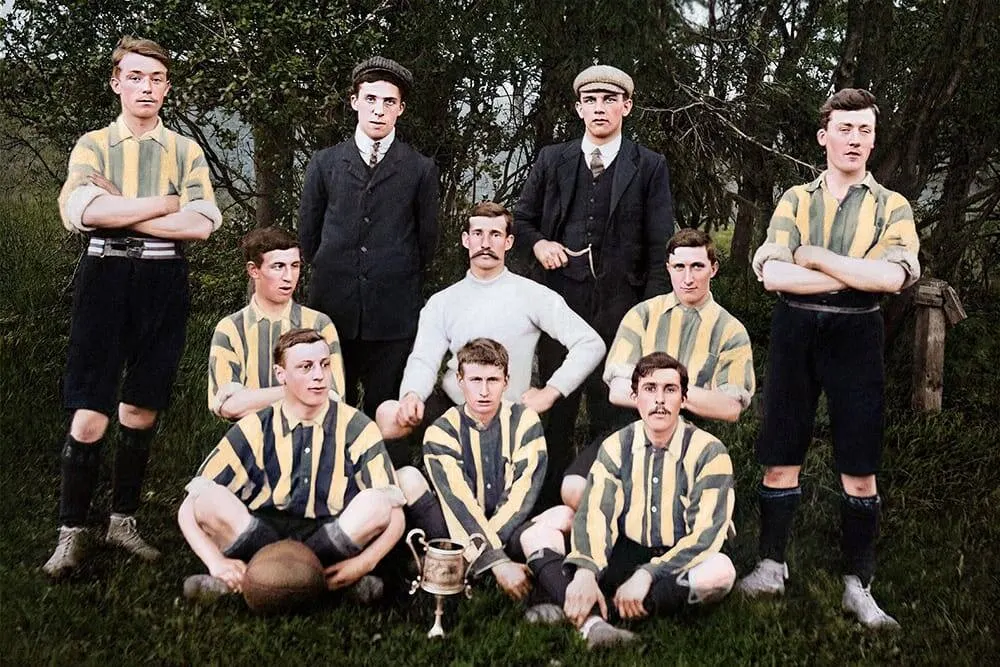
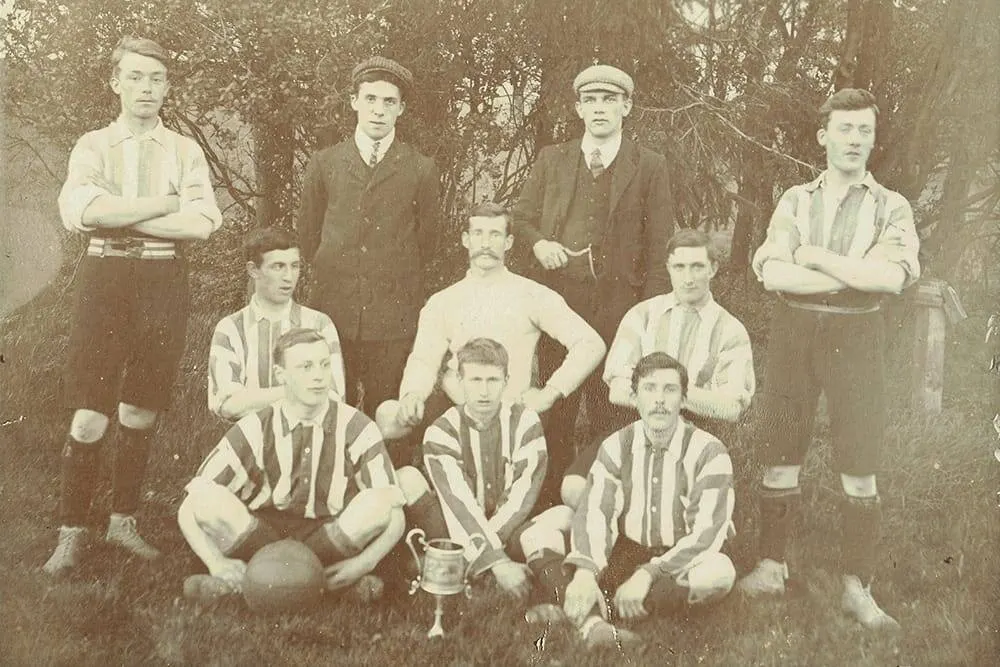
Before and after sliders on real jobs - drag the handle to compare the original monochrome with the finished colour.
Why this is not the one-click version
Automatic colourisation tools have become genuinely impressive, and it is worth being clear about where they succeed and where they do not, rather than pretending they are useless.
What they do well is the broad pass: recognising sky, grass, skin and timber, and applying a believable palette in seconds. On a landscape or a wide street scene, the result can be most of the way there.
Where they fall down is specificity, and portraits are almost entirely specificity. Automatic tools converge on an average - a uniform sepia-tinted skin tone regardless of the person, hair that drifts brown, clothing that settles into desaturated blue-grey because that is the safest guess across millions of training images. They do not know that the uniform is Royal Australian Air Force blue rather than army khaki, they routinely bleed colour across edges in busy areas, and they have no way to keep two photographs of the same person consistent with each other.
The practical difference shows up in exactly the places people look hardest: faces, and anything with a documented correct answer. That is why this is hand work, and why an artist's time is what you are paying for.
Getting the best result from your photograph
Colourisation is the last step, not the first. If a photograph is torn, stained or badly faded, that damage is repaired first - otherwise the colour work is applied over problems that then have to be fixed underneath it. On most jobs restoration and colourisation are quoted together for that reason.
A few things make a real difference to what comes back:
- Send the original, not a phone photo of it. Colourisation is built on top of a high-resolution scan. Working from a snapshot of a print means working from its glare, its perspective distortion and its screen-sized detail.
- Tell us what you know. Eye colour, hair colour, the specific uniform or regiment, the make of the car, a description someone in the family remembers. Anything you can supply moves a decision from inference to fact.
- Say if there is a related colour photograph. A later colour picture of the same person is the single most useful reference we can have, because it settles skin, eye and hair colour outright.
- Flag what matters most. If the point of the picture is one person's face, we will spend the time there rather than distributing it evenly across the frame.
Faded and discoloured colour photographs are a related but different job: there the original colour was recorded and has decayed unevenly, usually as one dye layer outlasts the others. That is corrected rather than invented, and it is generally quicker - see photo restoration.